


John Brewster
Clase de 1820
Estudiante nº 6
Un artista popular sordo que observó atentamente el mundo que le rodeaba
John Brewster, Jr. (1766-1854) es considerado uno de los retratistas populares más importantes del arte de principios de América. Nacido sordo en una prominente familia de Connecticut, era un descendiente directo de William Brewster, el líder peregrino del viaje del Mayflower. Brewster estudió arte con el Reverendo Joseph Steward y comúnmente pintaba a miembros de su familia y amigos a principios de la década de 1790. Su carrera se lanzó a finales de la década de 1790 cuando fue a vivir con su hermano Royal en Buxton, Maine. Desde allí viajó por la costa de Maine e hizo largas visitas a Connecticut y Massachusetts, contratado como retratista por la élite mercantil en los pueblos costeros de Kennebunkport, Newburyport y Mystic. En 1817 se matriculó como miembro de la primera clase de la American School for the Deaf en Hartford a la edad de 51 años. Después de tres años en la escuela, reanudó su carrera artística y pintó prolíficamente hasta principios de la década de 1830.
Obras de John
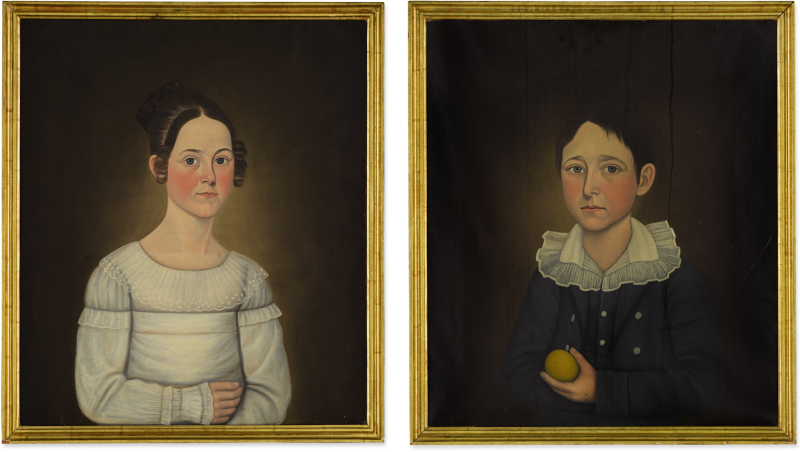
John Brewster lo pintó – un alumno original en 1817 en ASD


|
|
|
|
|
|
|
|
|
|
|
|
|
|
|
|
|
|
|
|
|
|
|
|
|
|
|
|
|
|
|
|

Mark Warren Hughey
Clase de 1976
Estudiante nº 5120

Mary Emily Macner (casada con Pollard)
Clase de 1968
Estudiante nº 4429
|
|
|
|
|
|
|
|
|
|
|
|
|
|
|
|
|
|
|
|
|
|
|
|
|
|
 |
 |
| 2021 Earth Day (April) | 2021 Hello May (May) |
 |
 |
| 2021 Cinco Mayo (May) | 2021 Memorial Day (May) |
|
|
MJP (Marie Jean Philip) Competition
in 2017
ASD Students’ Artwork
 |
 |
 |
 |
 |
 |
 |
|

Edward Larry Roberts
Class of 1967
Student #4291
Edward’s Artwork
 |
 |
His Artworks

Patricia Ann Walker (m. Golebiewski
Class of 1964
Student #3941
Patty’s Artwork


Nancy Ellen Mitchell
Class of 1975
Student #4891
Nancy’s Poetry
|
“Beautiful School” See this beautiful school, Aging as years pass by, But full of wonderful memories, Memories that linger in our minds See this beautiful school, Full of life and happy faces. Faces lighted with understanding The world, people and sounds. See this beautiful school, Empty it never is. New children with hopes, Entering and filling our places. See this beautiful school That you may not understand. It’s us and what we are. See this beautiful school As we see it now, in our mind And forever. |
 |

Peter Sydney Wall
Class of 1974
Student #4574
Peter’s Poetry
|
“Students” Now I would like to thank Alice, She stands in big hand. If she’d not be, How could we learn, Now we can learn And she, stand in the land of many deaf
|
 |

Edward “Eddie” C. White, Jr.
Class of 1975
Student #4773
Eddie’s Poetry
MY SPECIAL MEMORY OF MY LIFE
BY Eddie White, Jr., ‘75
As time passed
I stood on the highest peak on this world
Looking down at the sweet beloved mountain range
Covered with god’s love
With sweet white snow
Laid there like clouds in the sky
Y el sol en el vasto cielo
Brilla, hermosa y dulce
Que nunca he visto
Mientras continuaba bajando
Desde mi alto y dulce pico
Me paré sobre la hierba verde y los árboles
Miré el pico donde estaba
Y comencé mi camino por el bosque
La dulce naturaleza dio una dulce melodía
Que nunca había oído en mi vida
Lloré... y fui feliz
Mientras continuaba
Vi y oí el rápido río
Y corrí con todas mis fuerzas
Miré y dije Es hermoso, hermoso
Lloré por su belleza
Mis lágrimas cayeron como lluvia en este río
Yo era el feliz
Y volveré de nuevo
Mientras continuaba caminando
Vi la tierra sombría
A lo lejos, donde estaba el sol
Con color naranja y amarillo
Esa era la belleza del sol
Me senté en la roca y miré a mi alrededor
Comencé a cantar con gozo y felicidad
Mientras el sol descendía lentamente
La oscuridad comenzó a aparecer
Estrellas centelleantes y una brisa dulce
Me hicieron quedarme dormido
And I dreamed of what I did
And called it “My special memory Of my life.”
|
“Students” Now I would like to thank Alice, She stands in big hand. If she’d not be, How could we learn, Now we can learn And she, stand in the land of many deaf
|
|

Carmen “Carl” Arthur Romano
Class of 1969
Student #4176
Carl’s Wood Carving
 |
 |
 |
 |

Michael “Mike” James Rose
Class of 1978
#4622
Mike’s Performance
Love In a Silent World: A Young Couple Bridges a Chasm of Communication in the Deaf Culture
Mike Rose and Monika Valgemae share a peaceful moment between classes on the Gallaudet campus.
Life Magazine, September 1982
It is one of the noisiest college bars in the world. There’s the standard clink of beer mugs, the scrape of chairs against linoleum, the clatter of dishwashing from the back. There is also the squeal of feedback from poorly fitting hearing aids; the hoots, clicks, grunts and hums that pop out unbidden in the middle of conversation from the throats of people who cannot monitor their own voices; the thwack of hands slapped on the table to attract the attention, through low-frequency vibrations, of friends who are looking the other way; and the raucous, uninhibited rumble of deaf laughter. Loudest of all is the rock and roll that blasts at Max Volume from the jukebox in the corner. Most of the students at this campus hangout cannot hear the voices of the Sex Pistols, but they can sense the deep, resonating beat of the drums and electric bass, and many of them are tapping their feet.

Something else is strange about this bar. It’s bright. The patrons cannot talk in the dark. Hundreds of watts pour down on their hands, which wave, point, slice through the air in an excited chatter its practitioners call “windmilling.” Among the windmillers is a young couple, a boy with dark curly hair and a blond girl who sit at a table in the corner. In this room even casual acquaintances gaze at each other with the intensity of lovers because if they glance away for a second they are likely to miss half a sentence. But Mike Rose and Monika Valgemae are the genuine romantic article. Mike, 23, is a sophomore, Monika, 20, a freshman at Gallaudet College in Washington, D.C. They met last fall, when Monika was taking Gallaudet preparatory courses between high school and college. They are thinking about marriage. If they marry, they hope their children will be deaf.
Un audiólogo educado diría que Mike y Monika nacieron “con discapacidad auditiva”, probablemente por causas genéticas. Ellos prefieren “sordos”, un término que se signa coloquialmente metiéndose un pulgar en la oreja y agitando la mano hacia abajo como una trampilla. Debido a que las cócleas o los nervios auditivos de sus oídos internos están malformados, las ondas sonoras nunca llegan a sus cerebros. Ninguno de los dos puede oír los sonidos del habla humana. La pérdida auditiva de Monika se clasifica como “profunda” y la de Mike como meramente “severa”, lo que significa, dice él, que aunque no puede distinguir entre un violín y un piano, sí puede hacerlo entre un violín y una cortadora de césped. O, como dirían sus manos, Sonido violín piano igual igual aburrido, piano cortadora de césped diferente – una frase que, traducida literalmente, resulta en un inglés extraño (al igual que las frases en latín y chino si se conserva el orden original de las palabras) pero es perfectamente gramatical en el Lenguaje de Señas Americano.
En Gallaudet, la única universidad de artes liberales del mundo fundada expresamente para sordos, las relaciones suelen ser intensas. Cuatro de cada cinco personas sordas eligen casarse con otras personas sordas, y estos estudiantes saben que una vez que se gradúen y entren en el mundo oyente, las opciones serán limitadas. Lo inusual en Mike y Monika no es la seriedad de su compromiso, sino el hecho de que, de todas las personas en la comunidad sorda, se hayan elegido mutuamente. Mike, cuyos padres son sordos, no habla y se comunica únicamente a través del lenguaje de señas. Fue educado como “manualista”. Monika tiene padres oyentes; aunque ahora es una signante elocuente, fue enviada a escuelas donde se enseñaba el habla y la lectura de labios, y se prohibía el lenguaje de señas. Fue educada como “oralista”. Los manualistas (o “sorditos”, como a veces los llaman los oralistas) y los oralistas (o “labios de goma”, como a veces los llaman los manualistas) han sido tradicionalmente tan sociables entre sí como los Montesco y los Capuleto. Mike y Monika representan dos lados de un amargo debate de 200 años de antigüedad, cuyos combatientes llaman la Guerra de los Métodos. Se trata ostensiblemente de la mejor manera de educar a los niños sordos, pero en realidad trata sobre el papel de las personas sordas en su propia sociedad y en la sociedad de los oyentes.
La ceguera te aparta de las cosas, observó Helen Keller; la sordera te aparta de las personas. De ahí que los ciegos hayan sido videntes y poetas, mientras que los “sordomudos”, al no hablar, se asumió durante mucho tiempo que eran incapaces de razonar. Según la ley romana se les negaban todos los derechos legales; en la Edad Media se pensaba que estaban excluidos del cielo porque no podían decir los sacramentos.
De hecho, fue en este tecnicismo teológico que un clérigo católico francés llamado Charles Michel de l’Epée fundó la primera escuela pública para sordos a mediados del siglo XVIII. En su liceo de París, sistematizó los gestos caseros de sus alumnos sordos en “una forma visible de lenguaje” a través de la cual, si bien no podían pronunciar los sacramentos, podían entenderlos y signarlos. Un alumno sordo de su escuela trajo el lenguaje a América y, en 1817, ayudó a fundar la American School for the Deaf en Hartford, Conn., a la que asistió Mike Rose 150 años después. Fue aquí donde los signes methodiques de Epée se combinaron con los gestos ya utilizados en América para formar el Lenguaje de Señas Americano. Cuando se fundó la Universidad Gallaudet en 1864, heredó tanto el lenguaje manual como la filosofía manualista.
Pero muchos educadores creían que los niños sordos debían aprender a hablar porque, en palabras de un profesor alemán, “el pensamiento claro solo es posible en el lenguaje hablado”. Se consideraba una de las cuestiones filosóficas más importantes de la época. En 1880, cuando las principales autoridades de todo el mundo occidental se reunieron en Milán para resolver la controversia oral/manual, sus avances fueron informados diariamente en el London Times. Los oralistas, tras gritar “¡Evviva la parola!” (¡Viva el habla!), ganaron por una votación de 160 a 4.
El oralismo prevaleció durante las siguientes generaciones, y la mayoría de los líderes sordos se indignaron. Dijo uno de ellos: “Quitarle el lenguaje de señas a un sordo-mudo es como cortarle las alas a un pájaro”. Su punto de vista fue en gran medida ignorado hasta el movimiento por los derechos de las personas con discapacidad de mediados de los años 60, que trajo una nueva filosofía llamada Comunicación Total. Coincidiendo en que una gran variedad de medios ofrecería a los niños sordos el mayor rango de comunicación, los antiguos manualistas comenzaron a apoyar una combinación integrada de habla, lectura de labios, audífonos y lenguaje de señas, con énfasis en las señas. Aunque el oralismo sigue siendo la norma en la mayoría de los demás países, la Comunicación Total se extendió por EE. UU. A mediados de los 70, el lenguaje de señas se había vuelto tan de moda que el presidente Carter hizo el signo de “Te amo” durante su desfile inaugural. (El vicepresidente Mondale intentó hacer lo mismo, pero se equivocó con un par de dedos e hizo un gesto obsceno en su lugar).
La ironía de la Guerra de los Métodos es que ambos bandos son igualmente sinceros y bienintencionados. Los oralistas argumentan, razonablemente, que dado que la mayoría de las personas en el mundo se comunican hablando, la única manera de que las personas sordas participen plenamente en la sociedad es hacer lo mismo; si no lo hacen, se autoexcluirán en un gueto autoimpuesto. Si se enseña a los niños sordos a signar, dicen los oralistas, tendrán pocos incentivos para aprender a hablar y leer los labios. El lenguaje de señas hace visible una discapacidad invisible, le da a un niño muletas cuando podría caminar, aunque con cojera, sin ellas.
“HASTA EL PERRO SABE LENGUAJE DE SEÑAS”
 |
 |
| Members of the Gallaudet Dance Company keep precisely on beat through hundreds of hours of practice Monika (above) says “I have music inside.” | Every Morning Mike wakes to a flashing bulb triggered by his alarm clock. |
 |
 |
| At Gallaudet’s audiology lab, Monika finally responds to a 110-decibel blast. | A friend teaches Mike to sign the Lyrics to Devo’s “Through being Cool.” |
 |
 |
| Two-track conversation: Monika and her brother, Sven sign while their parents talk. | Round-table discussion: the Roses and their five children “windmill” on a Sunday afternoon. |
Most advocates of signing would respond that lipreading–or “speechreading,” as it is often called today, since the reader must watch the tongue, the throat, and the teeth as well as the lips–is simply too difficult. Because at least 60 percent of the sounds of English look like other sounds, one researcher has suggested calling it “lip-speculation.” “Where’s the baby?” “I put it in the dustbin”: as the deaf British poet David Wright notes, “baby” and “paper” look exactly the same. So, observes deaf educator David Anthony, do bed and mad and pad and mat and bat and pat and met and bet and pet. So do “Where there’s life there’s hope” and “Where’s the lavender soap?” Lip-readers are further stymied by mumblers, bad light, distance, mustaches. After many years of oral training, most deaf lipreaders catch between 25 and 50 percent of a rapid conversation. And as for speech, the imitation of sounds one cannot hear is so difficult that fewer than 10 percent of the people who are born profoundly deaf can easily be understood. The great majority of deaf people who have intelligible speech either have some residual hearing or became deaf after they learned to talk.
But the real turn of the screw, say the signers, is that oral skills are acquired so slowly that during the crucial early years a deaf child may be deprived of any means of communication. Every healthy hearing child, however dull or shy, learns language effortlessly because he is bombarded by it. By the time he is five, he has a vocabulary of 5,000 words. An oral deaf child may know fewer than 50. He may therefore have no way of learning, when his parents leave the house, whether they will be gone for an hour or a month; no way of knowing why presents suddenly appear on his birthday; no way, if he is scared or sick or excited, of telling anyone why. He has no effective way to communicate either with his parents or, perhaps more important, with himself.
In oral schools, argue the signers, the same dismal pattern is repeated. If a deaf child catches less than 50 percent of the spoken language and his teachers do not sign, how much will he learn of mathematics, science, history? As one deaf teacher puts it, “What good is it to be able to talk if you have nothing to say?”
Pero un niño sordo que está rodeado de lenguaje de señas construye un vocabulario manual a un ritmo similar al de un niño oyente que construye uno hablado, a menudo comenzando incluso antes porque los músculos de las manos son más fáciles de controlar que los músculos de la boca.
Los signantes dicen que para tener vidas emocionalmente satisfactorias, las personas necesitan más que el habla. Necesitan un lenguaje que puedan dominar por completo, uno que confirme en lugar de ocultar su identidad. Están de acuerdo en que el lenguaje de señas aísla a los sordos de los oyentes; pero debido a que las dificultades de la lectura de labios se agravan cuando las personas sordas intentan conversar hablando, el oralismo los aísla unos de otros.
Betty Miller, una conocida artista sorda, angustió a muchas personas oyentes en Gallaudet cuando montó una exposición de dibujos en los que los dedos de los niños sordos estaban siendo cortados como resultado de las enseñanzas oralistas de "oyentes" sin corazón (un término de derogación análogo a "blanquitos" de un negro o "gringos" de un hispano). Bajo una imagen de dos niñas pequeñas, ambas con enormes audífonos y con las manos inmovilizadas, Miller escribió el siguiente poema en la sintaxis del Lenguaje de Señas Americano: DIOS/ME HIZO SORDO/PERO ELLOS/QUIEREN QUE APRENDA/ A HABLAR HABLAR/ OÍR OÍR… COMO LOS OYENTES./ ¿NORMAL?/ YO INTENTO DURO/ SER NORMAL IGUAL/ HASTA QUE SOY UN BASTARDO/… FRACASO…/¿POR QUÉ… ?
No solo los padres de Mike Rose –Richard, un carpintero, y Maureen, una supervisora de línea de montaje– son sordos. También lo es el hermano mayor de Mike, Ricky; sus tres hermanas, Sandra, Debra y Noreen; tres de sus tíos; dos de sus tías; y dos de sus primos. Todos ellos usan el Lenguaje de Señas Americano. Incluso el perro de la familia Rose, un schnauzer llamado Smokey, conoce las señas de "quieto", "siéntate", "dame la pata" y "hazte el muerto". Cuando ve la seña de "dispara", Smokey se hace el muerto.
Cuando alguien toca el timbre de la casa de los Rose en Glastonbury, Conn., una luz parpadea. Cuando suena el teléfono, otra luz parpadea. El teléfono es en realidad un teletipo en el que los Rose escriben sus conversaciones en lugar de decirlas. Solo pueden conversar con otros teletipistas, pero eso no es un problema ya que prácticamente todos sus amigos son sordos y tienen dispositivos similares. Por la mañana, los Rose son despertados por bombillas encendidas por sus despertadores. Por la noche, se sientan en su sala de estar viendo dos televisores, uno encima del otro, uno sintonizado con películas para las mujeres Rose y el otro con deportes para los hombres. Sin bandas sonoras que compitan, dicen que esto no distrae. Durante muchos años, la televisión fue inaccesible para los sordos; ahora, mediante un receptor especial de "decodificación", pueden sintonizar 40 horas de programas subtitulados especialmente cada semana.
MONIKA SOPLÓ UNA PLUMA PARA APRENDER "F" Y "V"
Strong deaf is the way Mike describes his family. When Maureen and Richard Rose recently celebrated their 25th wedding anniversary, the children threw a surprise party with 130 guests. “There were two groups at the party, hearing and deaf,” says Maureen, who has a fair amount of residual hearing and speaks in an intelligible though toneless voice. “More deaf, of course. Deaf stayed longer and had more fun. Hearing stayed only a short amount of time.” On each of his legs, Richard wears a tattoo of a large open eye–his way of saying that most things that cannot be heard can be seen.
And on his arms Richard has five tattooed babies, one for each of his strong deaf children. Ricky was the first. As a baby, he paid little attention to the clatter of pots and pans, so Maureen matter-of-factly took him to the doctor and had his hearing tested. She was neither surprised nor disappointed to find that he was deaf. Mike was born the next year and turned out to be deaf as well. At that time the Roses could not afford a “baby-cry signaler,” a flashing light triggered by a microphone near the crib, a standard appliance in most deaf homes. During his first year Mike slept next to his parents’ bed with his mother’s right hand resting on his chest to pick up the sounds of crying. (Crying and cooing are reflexes not dependent on auditory stimulation, so deaf babies sound exactly like hearing babies during their first year.) All five Rose children started to sign when they were less than a year old.
One by one they left home at the age of three to attend the American School for the Deaf in Hartford. Mrs. Rose cried at each departure, but she was confident her children would be happy. I lonely first, signs Mike, but fun soon, many deaf friends same like me, pillow fights, sports, playing cards, captioned movies every week. Kids with deaf parents all leaders because teach other kids sign. Kids with hearing parents jealous me because in my family good communication, their parents not sign so communication terrible. They say, wish have mother father deaf! They not want home on weekends. Mike and his siblings loved to go home on weekends. Every Friday night the Rose family would sit up for hours, catching up on the week’s events, windmilling like crazy around the kitchen table.
Mike and his friends called the nearby Mystic Oral School the Mistake School. They hated the aspects of their own Total Communication curriculum that smacked of oralism. In speech class, he remembers, everyone sick, absent, avoid avoid. One kid got special award for best speech then goes out and hearing can’t understand him, says but I best speech award! What point practice oral oral oral if it never gets you anywhere?
When Mike passed the entrance exam to Gallaudet College, the Roses were delighted. Deaf people Gallaudet very impressive. Congratulations! Good! Proud of me! He decided to major in business administration, but his greatest interest was his part-time job counseling deaf secondary school students. Once again, his family background made him a natural leader. He would have been a desirable catch for almost any girl on campus, but he chose someone raised on the other side of the War of Methods, a young blond dancer.
Monika’s parents, Mare and Mardi Valgemae, are Estonians whose families fled to the United States after World War II. Mardi, her father, is an English professor at New York City’s Lehman College; Mare is a financial librarian. Mardi’s father was a cellist, and at one time Mardi himself considered a career as a concert pianist. “I weep over Schubert,” he says. “Mozart’s Eine Kleine Nachtmusik will get me to do anything.” Since the birth of their two children, Monika and Sven, both of whom are deaf, he has given up the piano. “I listen,” he says. “I can’t bring myself to play anymore.”
The Valgemaes both speak four languages, all with great rapidity and expressiveness. When Monika was born, a tow-headed infant of unusual beauty and vivacity, they decided she would start piano lessons at the age of three and, by having a Russian nanny on Monday, a French nanny on Tuesday, and so on, would learn five or six languages by the time she was six.
“When Monika was three months old,” he says, “we wheeled her bassinet into the kitchen and slammed the refrigerator door by mistake. Loudly. She was right next to it and she didn’t wake up. I said to Mare, ‘Don’t you think that’s a little strange?’ ” Eighteen months and four doctors later–by which time Monika screamed whenever she saw a man in a white coat–they took her to the audiology lab at the John Tracy Clinic in Los Angeles. After a sophisticated battery of tests, they were told that Monika was profoundly deaf.
“No music. No languages.” Eighteen years later, Mare’s voice still cracks. “Those were the first things that struck me. No one in our families had ever been deaf. It was the most shocking thing that had ever happened to us.” Mardi wipes his eyes, “We went home,” he says. “It was three o’clock in the afternoon. We went to bed, pulled the covers over our heads, held each other, and wept.”
Los Valgemaes inscribieron a Monika en la escuela preescolar oral de la John Tracy Clinic, la más famosa del país. Monika soplaba plumas para aprender la diferencia entre «f» y «v», «p» y «b», «k» y «g». Empeñaba cristales, apagaba velas, se miraba la boca en un espejo y, durante una hora cada noche, se ponía la mano en la mejilla de su madre y el pulgar en los labios para sentir las vibraciones. Mare levantaba una cinta roja para los sonidos sonoros, una azul para los sonidos de aire, una marrón para los sonidos nasales. Monika probó miles de combinaciones de labios, dientes y lengua, y cada vez que pronunciaba o leía los labios de una palabra correctamente, su madre le ponía un pequeño corazón rojo en la frente.
Según la filosofía de John Tracy, los niños sordos no pueden comprender el significado de las palabras a menos que las experimenten realmente. No bastaba con mostrarle a Monika una foto de una vaca; la llevaron a una granja para que tocara la vaca. La llevaron a las montañas para aprender «nieve», «congelado» y «manopla». Le dieron dos peces de colores para aprender «pez» y «nadar»; cuando murieron, aprendió «muerte» y «triste». Funcionó. Monika se convirtió en ese raro producto, un éxito oral. Le encantaba la escuela. Apareció en una película de Tracy en la que su padre le daba las gracias por una flor que le había regalado, y ella respondió, con voz suave, trabajosa pero claramente comprensible: «¡De nada!».
Cuando Monika tenía tres años, nació su hermano Sven. Esta vez Mare estaba segura de que él era sordo antes incluso de salir del hospital. Se preparó para más años de plumas y vacas, más clases de deportes, arte y fotografía para sustituir a la música. Ella y su marido, concluyó, debían ser portadores de genes recesivos para la sordera neurosensorial. Dado que la escuela Tracy no permitía que más de un niño por familia asistiera, los Valgemaes decidieron mudarse a Nueva York. Allí Monika y Sven podrían ir a la Lexington School for the Deaf en Queens, la primera escuela puramente oral del país.
Aunque el lenguaje de signos estaba entonces prohibido en el aula (Lexington ha cambiado desde entonces su política), los alumnos lo utilizaban entre ellos en el patio de recreo, y al principio Monika, entonces de seis años, no sabía qué era. Nunca vi eso, explica ahora, en lengua de signos rápida y elegante. Lloré, lloré, no podía entender. Antes no sabía qué era ser sorda. Ahora mis amigos decían: «eres sorda, el nombre de la escuela es Lexington School for the Deaf». La diferencia es que los oyentes pueden entender aunque te tapes la boca, los sordos deben ver. Oh, entiendo, soy sorda. Los sordos usan signos.
Monika pronto se volvió fluida en lengua de signos, pero sus padres no le permitieron usarla en casa, ni siquiera con su hermano. «Monika, habla con Sven», le decía su madre. «¡Sven, baja las manos!» Sven y Monika lo intentaron, pero encontraron que su habla era mutuamente indescifrable. Se comunicaban en secreto. Se contaban todo. Finalmente, cuando tenían ocho y 12 años, Mare le dijo a su marido: «Mira, Mardi, tienen un mundo propio. Dejémosles que se comuniquen con signos».
Monika was a brilliant student. She did so well at Lexington that her parents decided to mainstream her at a public school. Mastering all her subjects through lipreading, with the aid of a resource room where she and a handful of other deaf students could get special help, she won several major academic awards and graduated second in her class of hearing high school students. Glad I mainstream, she signs. Good education, fun in sports. Sometimes social life not so fun. I went only one date with hearing boy. Awful! Too dark to lipread. Every day after school I went to Lexington School to see deaf friends, use sign language for enjoyment, comfortable and happy.
Four years ago, the Valgemaes bought their children a doorbell flasher and a teletypewriter. Last year, with great hesitancy, Mare Valgemae started to learn to sign in order to communicate better with her son, Sven, whose oral skills are less highly developed than Monika’s. Mardi, at least for the present, has decided to stick with the spoken word.
The Valgemaes are as convincing an advertisement for oralism as one is likely to find. Mare and Mardi have avoided the trap most hearing parents fall into–what one Gallaudet psychology professor called the “I love you but I hate your deafness” syndrome. Monika, far from being a bitter and maladjusted “oral failure,” is a confident and successful young woman with skills she never would have acquired had she had Mike’s parents and Mike’s education. Yet, says Mare Valgemae wistfully, “The only thing we don’t have in our family is the kind of conversation where somebody tells a joke, and everybody laughs, and then everyone starts talking and laughing at once… and I bet Mike’s family has that.”
 |
| Monika offers reinforcement to Mike as he phones home on one of Gallaudet”s teletypewriters. |
Though Monika could have gotten into a college for the hearing, she decided to go to Gallaudet and major in mathematics. Her parents are content with the decision; Gallaudet, they say, is the Harvard of the deaf. For Monika, Gallaudet was the answer to a question she had been asking herself for some time: Would she stay in the world of the hearing, or would she join the world of the deaf? I chose Gallaudet because learn about deaf culture, deaf people, she signs. Oral lonely. At Gallaudet, meet Mike Rose, learn love what it is. Talk talk talk with him every day, all night long, talk about feelings deep inside. Mike very skilled, very beautiful signer. For me, important communicate. She repeats the “important” sign–a sphere described by two cupped hands, thumbs touching forefingers–but alters its meaning by making the motion more emphatic. Essential communicate. That why I love Mike.
In the land of the blind the one-eyed man may be king, but in the land of the deaf, the deafer you are the better. Hard-of-hearing students are suspect at Gallaudet, as are the “post-lingually deaf”–those who lost their hearing after they learned language and can therefore speak well without having spent thousands of hours blowing at feathers. Explains Monika’s psychology professor, King Jordan, both of whose auditory nerves were severed in a motorcycle accident when he was 21, “I haven’t heard a thing in eighteen years, but to most of my students I’m not deaf, I’m deafened. Unlike them, I know what it is like to hear. It’s both a blessing and a curse. I remember music, the sound of the 12-string guitar I used to play, rain on a metal roof, wind. I think I remember what it sounds like to run through autumn leaves. I know it’s not like grass or a road. At Gallaudet, all these memories make me a hearing person with deaf ears.”
Gallaudet is not just a college. It is an international resource center on deafness, with model primary and secondary schools, an audiology center, a center for the study of sign language linguistics and a center for law and the deaf. The entire campus is geared to the fact that its students cannot hear. All classes are taught simultaneously in speech and sign; the classrooms are specially designed so that every student’s hands are visible to every other student. Graduates are instantly identifiable by other deaf people because they sign with an upper-crust “Gallaudet accent.” To an outsider from the hearing world, the campus seems rather like a foreign country, and indeed last year a language student from Georgetown University spent his junior year abroad there.
Some of the hearing members of the faculty (who must pass sign language proficiency tests to obtain tenure) complain that Gallaudet is too solicitous of its students’ needs, too intensely enjoyable, too much like Eden and too little like the real world. Says audiologist Stephen Lotterman, “You can go through five years here and never leave the campus–and never speak a word.”
Only problem with Gallaudet, according to Mike Rose, nobody want leave. This credit, that credit incomplete so stay with friends little longer. Graduation sad day. Once Gallaudet students do graduate, some discover that they can find only blue-collar jobs. But others have become physicists, chemists, teachers, lawyers, computer programmers. About 40 percent remain professionally in the deaf world. In one study of the deaf elite, more than 80 percent had degrees from Gallaudet.
«De todas las discapacidades físicas —escribe el psicólogo Hans Furth—, la sordera es la única que hace que sus miembros formen parte de una comunidad natural». Existen asociaciones de exalumnos sordos, clubes sociales de sordos, iglesias de sordos, equipos deportivos de sordos, revistas de sordos, periódicos de sordos, residencias de ancianos sordos. Lo mismo podría decirse de los negros o los judíos o los italoamericanos, pero la comunidad sorda difiere de estas otras subculturas minoritarias porque su membresía no se transmite de padres a hijos, sino de compañeros a compañeros. Dado que aproximadamente nueve de cada 10 personas sordas tienen padres oyentes y nueve de cada 10 tienen hijos oyentes, la mayoría de ellos adquieren y comparten sus identidades —y su lenguaje cultural, la lengua de signos— en los patios de las escuelas residenciales o en los dormitorios de Gallaudet. Para muchos signantes, la integración de estudiantes sordos en escuelas para oyentes no es una forma bienvenida de integración, sino un paso hacia la reducción del orgullo y la camaradería de los sordos. Como dice el administrador de acuerdos Jack Gannon: «Para la mayoría de nuestros estudiantes, Gallaudet es la corriente principal».
Algunos miembros de la comunidad establecen una distinción entre «sordera», una descripción de la pérdida auditiva, y «Sordera», una descripción de la identidad cultural. El profesor King Jordan, por ejemplo, es sordo pero no Sordo. Carol Padden, una investigadora lingüística sorda (y Sorda), da este ejemplo: «Una persona sorda crece en un entorno oral, sin haber conocido ni hablado con personas Sordas. Más tarde en la vida, la persona sorda conoce a una persona Sorda que lo lleva a fiestas, le enseña lengua de signos y le instruye en la forma de vida de las personas Sordas. Esta persona sorda se involucra cada vez más y deja atrás su pasado al unirse a otras personas Sordas».
Mike Rose es Sordo. De él, Monika Valgemae, que solía ser sorda, está aprendiendo a ser Sorda.
«Sueño», signan los bailarines, «sueño imposible». Vestidos con largos vestidos blancos de faldas amplias, la Compañía de Danza de Gallaudet gira, salta y se balancea y signa, mientras el viejo estéreo del departamento de danza reproduce una versión cursi de «The Impossible Dream». Si pudieran oír el disco, a los bailarines les parecerían sentimentales las letras, pero en el lenguaje condensado y poético del signo artístico, la canción tiene un poder extraordinario. ¡Infierno! ¡Cielo! Mirar hacia. ¡Saber! ¡Verdadero! ¡Gloria! Yo mismo, calma, muerte. Mundo, mejor. Hombre, deshazte de la tristeza.
«OJOS QUE REALMENTE VEN»
Monika may not be able to weep over Schubert and Mozart, but through dance she says she has music inside. She started ballet lessons at the age of four, and since coming to Gallaudet she has also mastered “sign language dance,” disco,jazz and tap. She does a Fats Wailer tap number with two other profoundly deaf dancers, and when they shuffle through their flap, grapevine and buffalo steps, the clicks of their taps on the studio floor are exactly synchronized. Their sense of rhythm does not, as most hearing audiences assume, come from vibrations. “How could they keep track of the music through their feet?” asks dance director Diane Hottendorf. “They’re in the air half the time!” It comes, rather, from hundreds of hours of practice, first with a bass drum pounding out a low-frequency beat, ultimately with just a couple of introductory bars signed in tempo offstage. Says Hottendorf, “I don’t know exactly where rhythm is, but I know it’s not in your eardrum. Once you explain the mood of the music to these dancers their whole bodies become the mood. The deaf world is a moving world. Their language is movement. Their eyes are eyes that really see. They wear rhythm.”
Both Mike and Monika agree that deaf people are more at home with their bodies than hearing people. Explains Monika, Deaf communicate with whole body, hands, eyes, face, chest, not just moving lips up and down one quarter inch. Since they can’t call out, deaf people touch constantly to get each other’s attention. (They also wave, stomp and, at Gallaudet in the springtime, shoot each other with water pistols.) Mike does a little pantomime to explain the difference in body language, gently tapping the shoulder of an invisible hearing person. Oh no! he signs. Hearing shocked, jump, terrible! You touched their body! Trespass invasion!
Mike and Monika do make occasional forays into the hearing world. Like any young couple, they go to movies together (usually foreign ones, because they are subtitled), athletic events, restaurants. First try voice, signs Monika, and if waiter not understand use paper and pencil. Better than getting wrong food. Monika, because she grew up among the hearing, is usually in charge off campus; Mike is clearly the leader at Gallaudet. On campus they are rarely apart. When first meet Monika not have high hopes, signs Mike. Very beautiful girl, family very different. But soon talk about deaf world, sign language, families, travel, many many things, she felt same way me. Before had puppy love with other girls but with Monika is not puppy. Signs Monika, See Mike every day since last fall and never never yet bored!
Mike and Monika often talk about the relations between hearing and deaf. They tell each other about the dreams they have both had in which they can communicate easily with hearing people. Signs Mike, Usually my dreams no conversation, just pictures. Moods, colors, red, blue, angry or sad. Sometimes in dreams deaf and hearing can read each other’s minds, not have to sign or speak. I wish.
If they had the choice, would they want to hear? Nice to hear music, signs Monika. Mommy sometimes describes me sounds, wind, bird songs, cat purrings. Would like to hear nice, beautiful sounds. But speech, no. Would hear sounds but could I understand what they mean? Too late to learn. Signs Mike, Sure, good to hear if speak. Easier communicate, communicate most important in world. But only if could sign too. If had to stop sign, prefer deaf.
American Sign Language–generally called Ameslan or ASL–is a linguistic anomaly, a language without a written form, a language that dries up on paper but in person is as graceful and intoxicating as a well-choreographed ballet.
Translated sign by sign into English words, Ameslan sounds like a children’s language, a primitive language, a pidgin. It is none of these. It sounds that way because it is simply not English, not even a visual representation of English. British and American sign language, for example, are completely different. Ameslan is an entity unto itself, as syntactically complete (according to linguistic researchers) as any spoken tongue.
But it has no articles, no agreement between subjects and verbs, no inflected plurals, no tenses. Time is indicated by the position of the hands (the future lies in front of the shoulders, the past behind) or by modifiers such as finish, up till now, later, not yet, long time ago. Pronouns are generally omitted. Rather, if a signer is telling a story about two people, he sets up A on his left and B on his right. Whenever he talks about A, his hands move to his left; when he talks about B, to his right.
THE SIGN FOR STREAKING IS “NUDE ZOOM-OFF”
Each sign represents a word or concept, comparable to the ideograms of Chinese or Japanese. But signs are not static pictures frozen in space. They move. Bears scratch their chests, elephants wave their trunks, rabbits wiggle their ears. Some signs have historical origins: girl comes from tied bonnet strings, cheese from the workings of an old-fashioned cheese press. New signs to represent new concepts are constantly being added to the vocabulary. When the streaking craze reached Gallaudet, a sign was immediately invented that translates literally as nude zoom-off.
Perhaps the most unusual aspect of Ameslan is that it always presents information in the order in which it happened. Take the English sentence, ‘It was a thrill to watch the sunrise this morning.” Mike Rose would sign, Now morning sunrise, I look at, thrill. First the sun must rise; second, I look at it; and third, I am thrilled by it.
El Ameslan tiene juegos de palabras y rimas visuales. Tiene dialectos raciales y regionales. Se puede signar más rápido de lo que se puede hablar. Pero, ¿puede realmente hacer todo lo que puede hacer el inglés? La mayoría de los signantes estarían de acuerdo en que, aunque las abstracciones se pueden expresar en Ameslan (después de todo, en Gallaudet, las clases de epistemología y sociolingüística se imparten en sign), el inglés es superior. Para transmitir emociones, describir el mundo físico o contar una historia («es un lenguaje maravilloso para narradores», dice la profesora de lenguas romances Catherine Ingold), el Ameslan sale ganando.
Pero como el Ameslan no es inglés, cuando la mayoría de los sordos escriben, el resultado es un extraño pidgin en el que se omiten los artículos, se mezclan las preposiciones y los tiempos verbales y las partes de la oración se destrozan irreparablemente. Y las personas que no saben escribir inglés no pueden leerlo. El estadounidense sordo promedio lee a un nivel de aproximadamente quinto grado. Esto no se puede culpar solo al lenguaje de señas, aunque los usuarios de Ameslan ciertamente cometen errores que a nadie más se le ocurrirían. Los oralistas, porque decodifican oraciones no leyendo los labios de cada palabra en el orden correcto, sino captando una de cada tres y completando conceptualmente el resto, a menudo lo hacen aún peor. Monika Valgemae, que obtuvo una puntuación en el 7% superior a nivel nacional en su SAT de matemáticas, lo hizo tan mal en la sección verbal como si hubiera marcado las respuestas completamente al azar.
¿Cuál es la solución? Algunos educadores promueven varias formas de «inglés signado», que utilizan signos de Ameslan en el orden de palabras del inglés y con inflexiones gramaticales inglesas. El problema es que este es un lenguaje artificial. Avanza laboriosamente a través de sus «-ed» y «-ings» signados, perdiendo toda la gracia y expresividad que hicieron admirable al lenguaje de señas en primer lugar. Otra posibilidad es el «cued speech», un método para facilitar la lectura de labios mediante señales manuales para distinguir entre sonidos que se parecen. Según todos los informes, los niños que se crían con «cued speech» tienen un inglés superior, pero la mayoría de los adultos sordos lo rechazan de plano. Como dice la instructora de Gallaudet Carole Frankel: «Huele a oral».
Así que la Guerra de Métodos vuelve al argumento oralista original, de que el lenguaje de señas aísla a los sordos. Lo hace. Más precisamente, la sordera aísla a los sordos. Por supuesto, para una persona sorda, que puede sentir que el lenguaje hablado de las personas oyentes es emocionalmente pobre, lo mismo podría decirse del inglés. El hecho de que haya más de 300 millones de hablantes de inglés y solo medio millón de usuarios de Ameslan no es un problema para nadie que crea que en la tierra de los sordos (o más bien, los Sordos) puede encontrar todo lo que necesita.
 |
| Monika y Mike se visten de punk. |
Mike and Monika are at a punk dance, another earsplitting Gallaudet social occasion. As one of their classmates commented, if you not deaf when go in, you deaf when come out. The floor is sticky with beer, the air is musky with marijuana, and for once it’s dark, though strobe lights flash in time to the music to help the revelers keep the beat. Mike is wearing blue lipstick and bright red stretch pants that he bought in a Georgetown punk store after the salesman, who had never met a deaf person before, took one look at him and said, “I see you in spandex.” Monika is wearing a purple minidress, purple socks, green glitter eye shadow and blue hair spray. She looks absolutely beautiful. As she wraps her arms around Mike, plants purple kisses on his cheeks, pats his spandexed midriff, leaps, wiggles and does little bunny hops around him, she glows with the electric radiance of someone who knows she is the most desirable woman and the best dancer in the room.
A pudgy girl wearing heart-shaped sunglasses jumps up on the bandstand and starts to sign to the music. “Rock and roll interpreting” is a favorite Gallaudet activity. First you learn the words from someone who is only hard-of-hearing, then you practice signing them to whatever muffled beat you can pick up when you turn the volume to Max. This interpreter is a master of the art. She signs and dances simultaneously, whipping her fingers through the air with such precise and frenetic rhythm that the sound of the music becomes, in some punk fourth dimension, visible. The song she is interpreting is by the Go-Go’s. It is called “This Town.” When she gets to the chorus, Mike and Monika and most of the other dancers start clapping along with her. This town is our town ! This town’s so glamorous. It is clear to everyone in the room what this song is really about. The dancers go crazy with movement. Bet you’d live here if you could/And be one of us.
 |
| Whenever she and Mike argue, says Monika, “we talk, hug and forget it.” |


